A closet overflowing with shoes often creates a common morning dilemma: plenty of options, but nothing that feels right for the day ahead.
Building a functional shoe rotation does not require a dozen niche pairs. It requires versatility—footwear that handles varying dress codes, stays comfortable across hours of walking, and pairs naturally with multiple outfits.
Here is how to build a dependable everyday shoe rotation, choose the right designs, and get the most value out of every pair.
1. What Makes a Shoe “Everyday Versatile”?
Before buying, evaluate a shoe against three core criteria:
- Balanced Silhouette: Footwear that is neither too chunky nor razor-thin pairs well with both relaxed jeans and tailored trousers.
- Neutral Palette: Tones like deep chocolate brown, matte black, oxblood, taupe, and off-white integrate seamlessly across different color palettes without clashing.
- Functional Outsoles: Ultra-thin, slippery leather soles limit where you can walk. A low-profile rubber sole, or a leather sole with a rubber protective tap (commando half-sole), delivers grip without adding bulk.
2. The 4-Pair Core Rotation
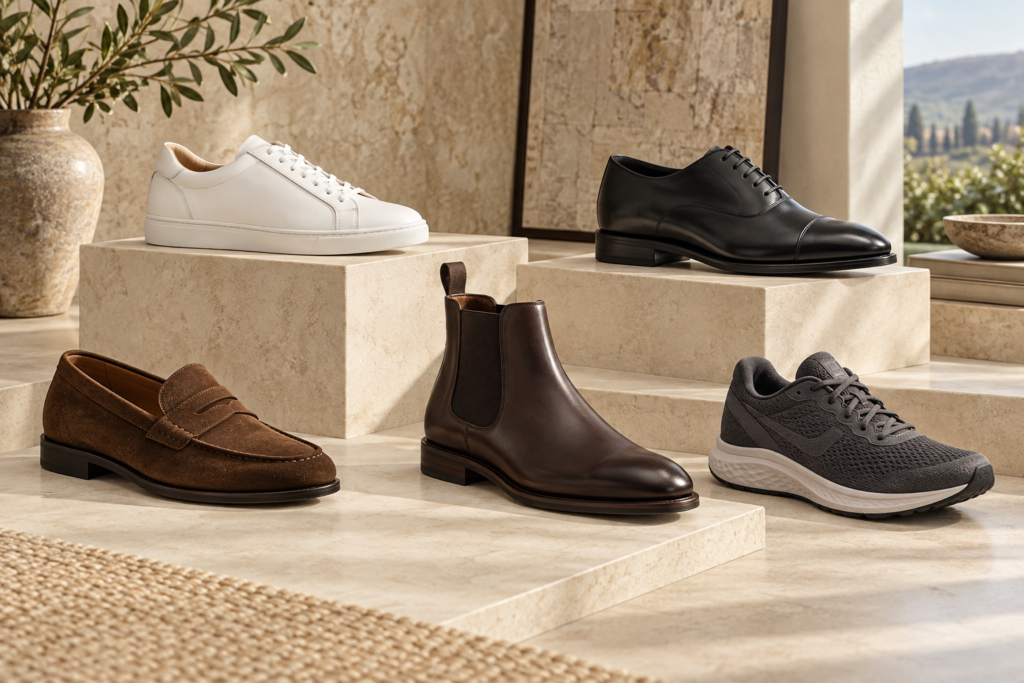
A compact, highly versatile shoe collection covers every setting from weekend errands to formal boardrooms.
| Footwear Style | Best Neutral Color | Primary Setting | Why It Works |
| Leather Penny Loafer | Dark Brown / Oxblood | Smart Casual, Office, Evenings | Slip-on convenience; dresses up denim and relaxes suits. |
| Minimalist Sneaker | Chalk / Warm White | Casual, Travel, Commutes | Uncluttered leather upper keeps relaxed outfits sharp. |
| Chelsea or Chukka Boot | Snuff Suede / Medium Brown | Fall/Winter, Daily Wear | Sleek ankle coverage, weather protection, durable profile. |
| Derby or Blucher | Black / Deep Espresso | Formal, Business Meetings | Open lacing system provides comfort across long workdays. |
3. How to Style Footwear for Day-to-Night Transitions
The easiest way to move an outfit between casual and formal is by balancing textures and pants lengths.
Loafers: The Ultimate Bridge Shoe
- Daytime Casual: Pair unlined suede penny loafers with straight-leg light denim, a classic white T-shirt, and an overshirt. The suede texture softens the formality of the shoe.
- Evening Dinner: Swap the denim for pleated wool or linen trousers and an unstructured blazer. Leather or dark-waxed loafers bring an immediate sense of polish.
Minimalist Leather Sneakers
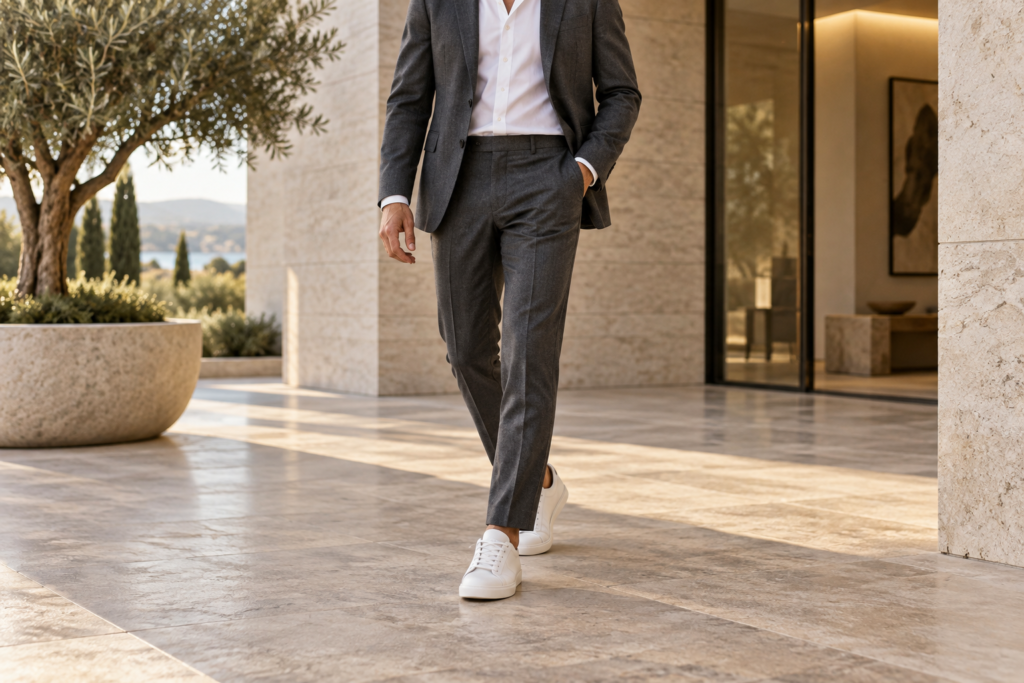
- Keep It Clean: Stick to low-top leather models free of loud branding, mesh, or neon accents.
- Trouser Interaction: Ensure trousers hit with little to no break (the fabric should gently graze the top of the sneaker without pooling over the laces).
4. Key Factors to Check Before Buying
- Uppers (Leather vs. Suede vs. Canvas): Full-grain calfskin molds to your feet over time and handles wet weather well with basic conditioning. Suede provides immediate comfort with zero break-in period, though it requires a hydrophobic spray before rainy days.
- Lining: Look for full leather or breathable calfskin lining over synthetic polyester linings. Natural leather absorbs moisture and minimizes foot fatigue and odor.
- Sole Construction: Shoes made with Blake stitching or Goodyear welting allow a cobbler to replace worn-out soles, extending the shoe’s lifespan across multiple years.
5. Daily Maintenance for Long-Lasting Footwear
- Insert Cedar Shoe Trees Immediately: Insert them as soon as you step out of your shoes. The wood draws out sweat and keeps the leather from curling or developing deep cracks across the vamp.
- Never Wear the Same Pair Two Days in a Row: Leather needs roughly 24 hours to dry out internally. Rotating pairs doubles their working lifespan.
- Brush After Every Few Wears: A quick 30-second brushing with a horsehair brush removes abrasive road dirt before it embeds in the grain.
A thoughtful footwear collection does not rely on trends. Investing in well-constructed, neutral, and comfortable shoes ensures you always have the right foundation for any outfit.