Author name: ramkishanrk6597

Everyday Style

Easy Weekend Outfits Built Around Brown Shoes

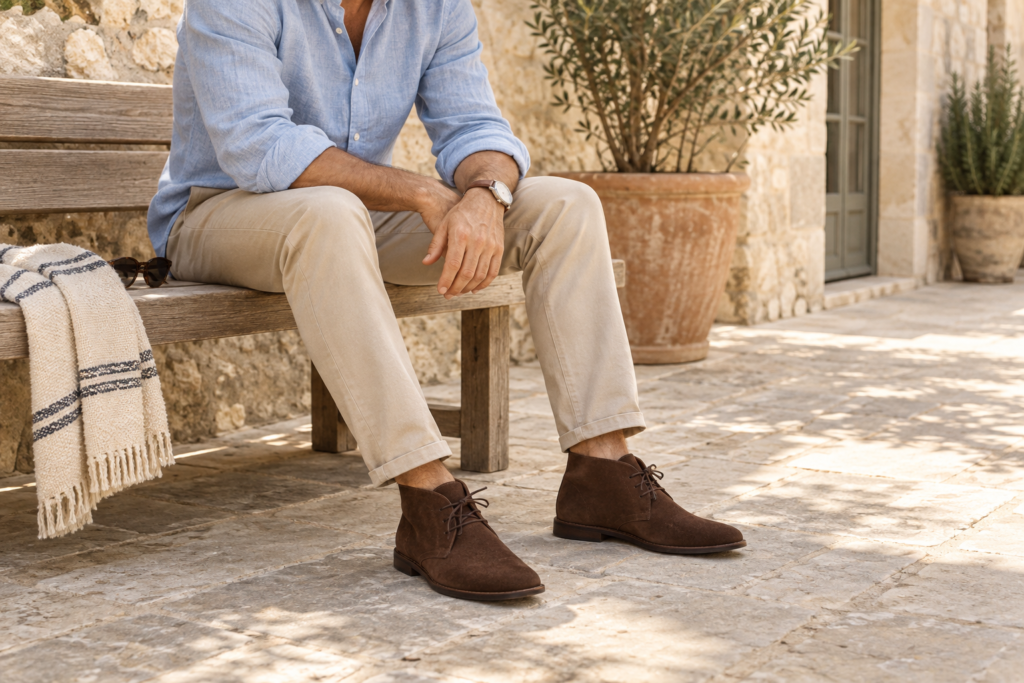
Black shoes can often feel too rigid and corporate for Saturday and Sunday. Brown shoes—whether rich espresso, warm chestnut, or light tan—add immediate warmth and texture to casual clothing. 1. The Coffee Run: Suede Loafers + White T-Shirt + Dark Denim 2. The Casual Lunch: Brown Chelsea Boots + Light Chinos + Overshirt 3. The Sunday Walk: Tan Suede Chukkas + Olive Fatigue Pants + Knitwear

Everyday Style

What Shoes to Pack for a Weekend Away

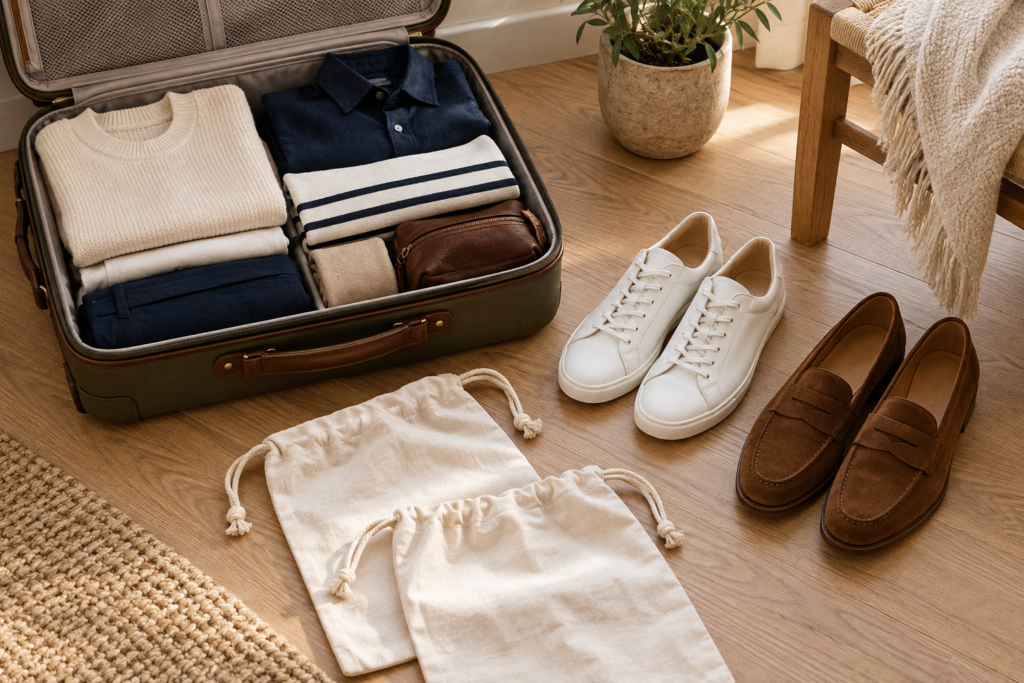
Overpacking shoes is the fastest way to crowd your bag and make your luggage heavy. For a standard two-to-three-day weekend trip, you only need two pairs of shoes: one on your feet, and one in your weekend bag. Shoe 1 (On Your Feet): The Travel Sneaker Always wear your bulkiest, most comfortable pair on the plane, train, or road. Shoe 2 (In Your Bag): The Upgraded Dinner Shoe Pack one versatile pair that elevates your clothes for dinner, rooftop bars, or events. Packing Tips to Protect Your Clothes

Everyday Style

From Office to Evening: One Pair, Two Outfits

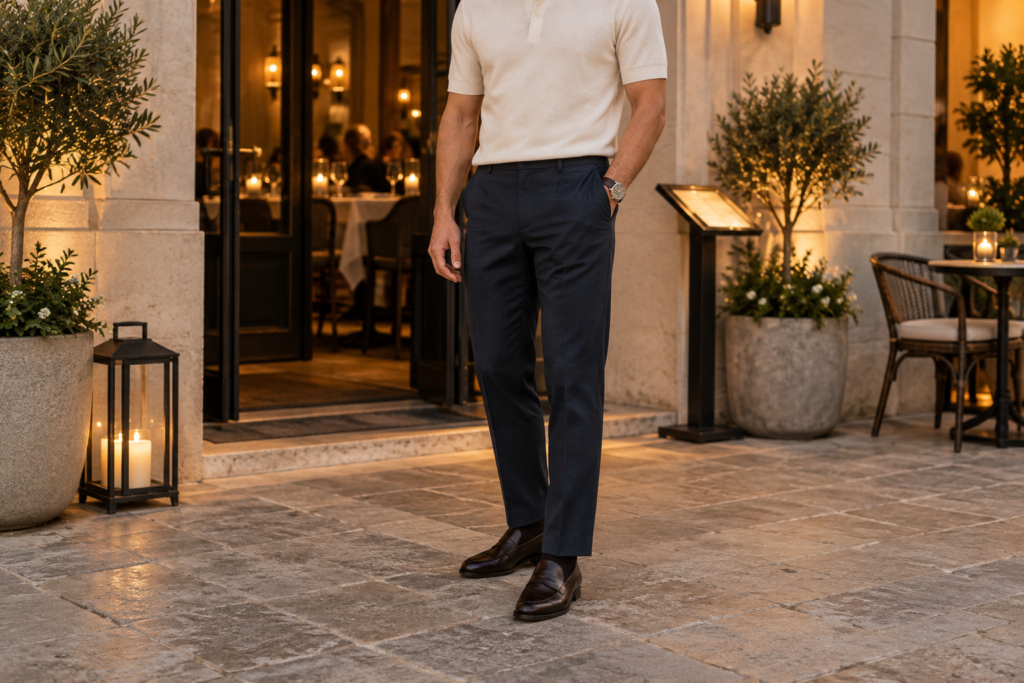
Switching from a 9-to-5 workday to an evening dinner or drinks does not mean you have to haul an extra pair of shoes to your desk. The secret is picking a transitional shoe that sits right in the middle of formal and relaxed. The Hero Shoe: The Dark Brown Penny Loafer or Suede Chelsea Boot Both styles are smart enough to look professional under office lighting, yet relaxed enough not to look stiff at a cocktail bar. Outfit 1: The Daytime Office Look During business hours, your footwear needs to anchor a structured, professional outfit. Outfit 2: The Evening Out Look Before leaving the office, make two quick changes to your clothes while keeping the same shoes on.

Everyday Style

How to Build a Three-Pair Shoe Wardrobe

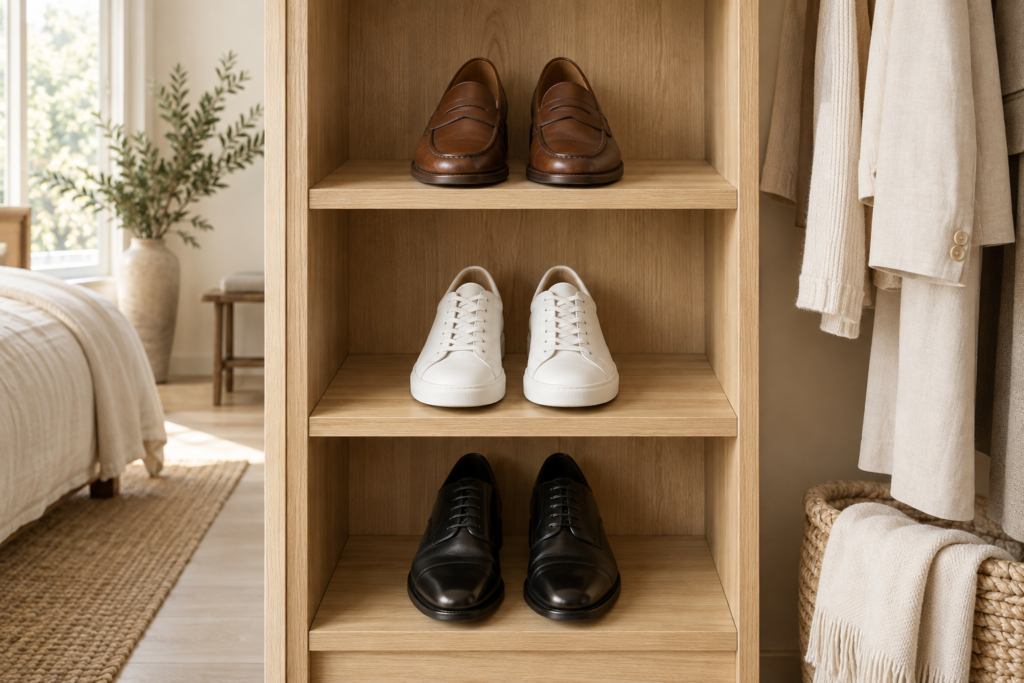
You do not need a closet full of shoes to look sharp. Most men only wear a fraction of what they own, while the rest collects dust. By choosing three versatile styles, you can cover 95% of life’s dress codes—from Sunday grocery runs to formal weddings. Pair 1: The Clean White Leather Sneaker Pair 2: The Medium-to-Dark Brown Loafer or Derby Pair 3: The Black Oxford or Clean Chelsea Boot Shoe Best For Color Choice Formality Level Minimalist Sneaker Weekends, walking, travel Plain White Low Loafer or Derby Daily office, dinner, smart-casual Chocolate Brown / Cognac Medium Oxford or Chelsea Boot Weddings, formal suits, nightlife Black High

Shoe Care

How to Store Shoes and Keep Their Shape

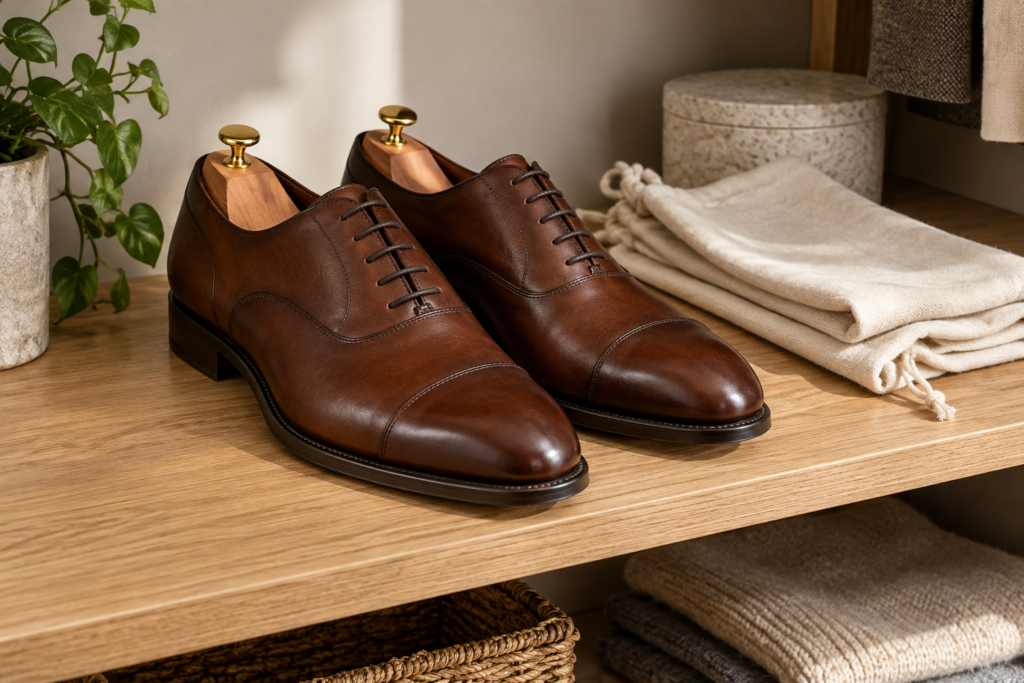
Tossing shoes into a dark pile on the closet floor crushes the heel counters, creates ugly toe creases, and traps sweat inside the lining. Storing your footwear properly takes minimal space and keeps them looking brand new. 1. Always Use Cedar Shoe Trees When you walk, your shoes bend, creating creases across the toe box. At the same time, your feet produce moisture that the leather lining absorbs. 2. Follow the 24-Hour Rotation Rule Never wear the same pair of leather shoes two days in a row. A full day of wear leaves inner leather damp. Giving them 24 to 48 hours to air out on shoe trees ensures the leather dries thoroughly and prevents bad smells. 3. Smart Storage Habits

Shoe Care

What to Do When Your Shoes Get Wet

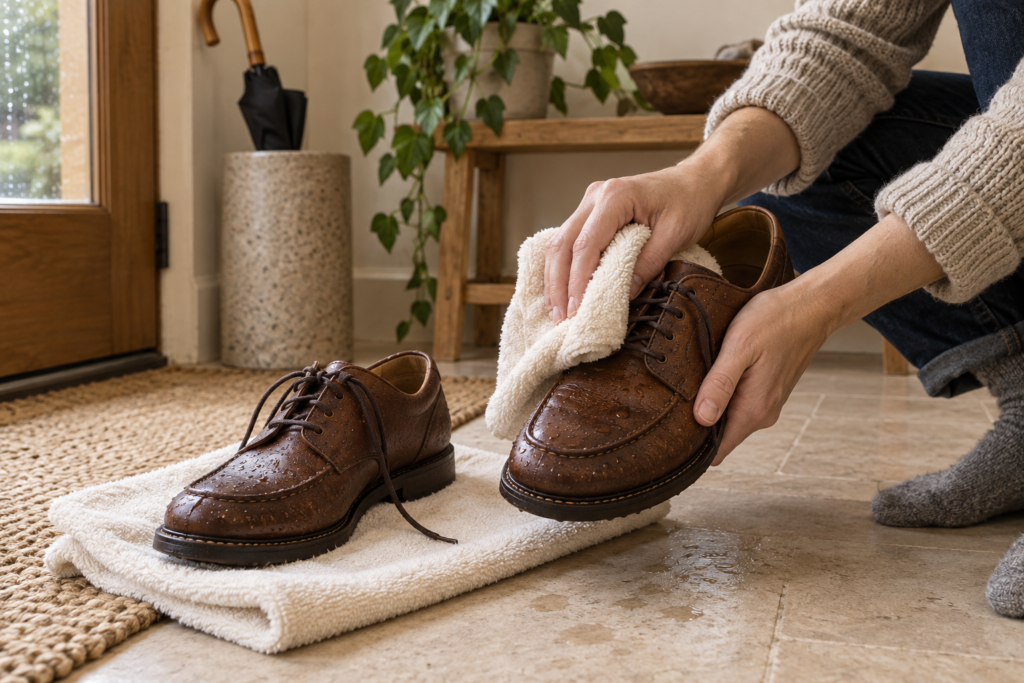
Getting caught in a sudden rainstorm happens to everyone. Wet leather becomes soft, weak, and easily stretched out of shape. The way you dry your shoes determines whether they survive or get ruined. The Golden Rule: Never Use Direct Heat Never place wet shoes near a radiator, fireplace, heater vent, or under a hair dryer. Direct heat bakes the wet leather, causing it to shrink, warp, and crack beyond repair. Slow, natural drying is the only safe method. The Step-by-Step Recovery Plan 1.Wipe off standing water:Do this immediately upon coming indoors. Pat down the outside and inside of the shoe with a dry towel. Lift out the removable insoles so air can reach the bottom. 2.Stuff with newspaper or paper towels:Do not use cedar shoe trees while soaking wet. Crumple unprinted paper towels or plain newspaper and pack them firmly into the toe box and heel. The paper pulls the moisture out from the inside. Replace the damp paper with fresh, dry paper every 2 to 3 hours. 3.Dry on their sides:Allows sole leather to breathe. If your shoes have leather soles, prop them up on their sides or tilt them against a wall. If they sit flat on the floor, the damp soles cannot dry and will develop mold. 4.Condition once fully dry:Crucial step to restore lost natural oils. Water washes out the natural oils in leather. Once the shoes are dry to the touch (usually 24 hours later), apply a generous layer of leather conditioner to restore softness.

Shoe Care

Shoe Brushes Explained: Which One Should You Use?

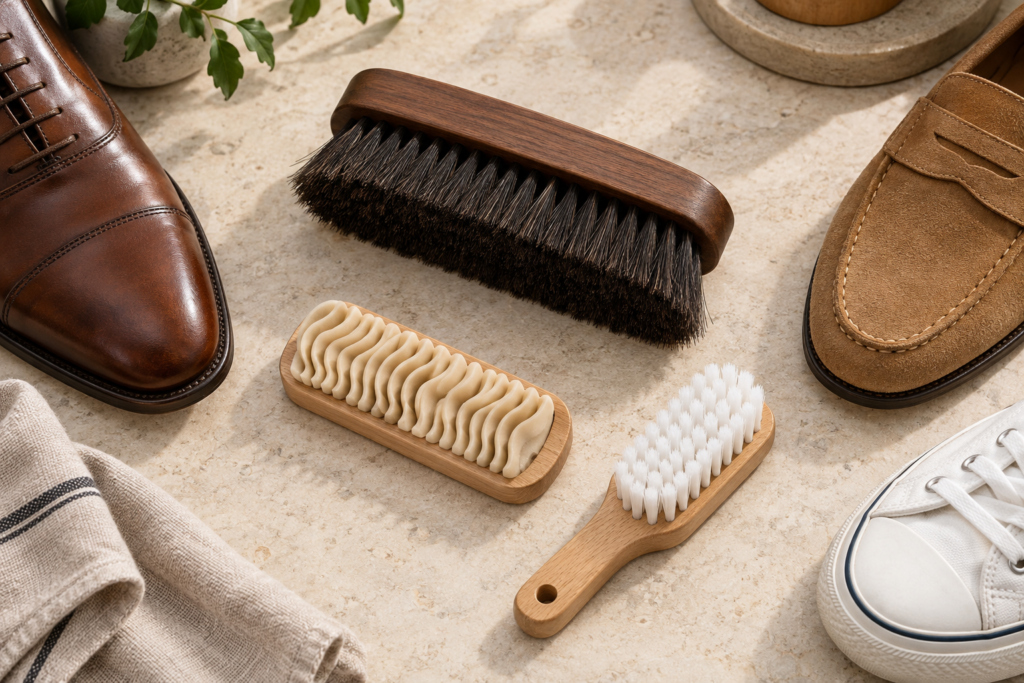
Walking down a shoe-care aisle can be confusing. There are soft brushes, hard brushes, wire brushes, and tiny round ones. Using the wrong brush can scratch your shoes, so here is what each tool actually does: 1. Horsehair Buffing Brush (The All-Rounder) 2. Dauber Brush (The Applicator) 3. Suede & Nubuck Brush (The Specialist) 4. Mud / Stiff Bristle Brush

Shoe Care

A Simple Weekly Shoe-Care Routine

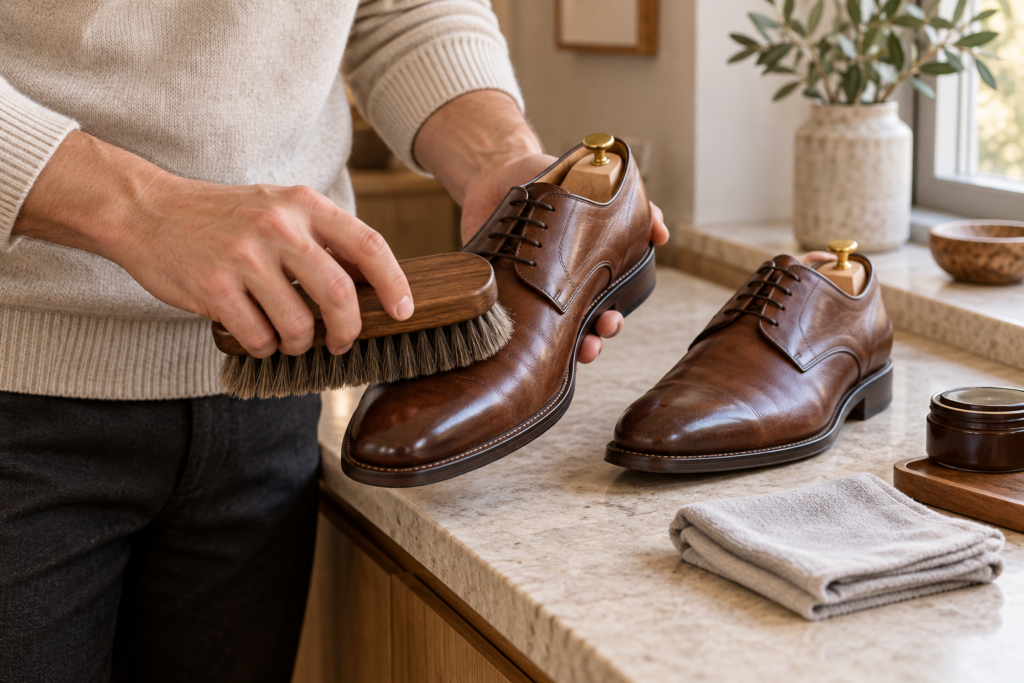
Taking care of your shoes does not require hours of work or expensive equipment. Spending just 10 minutes once a week keeps leather soft, prevents cracks, and doubles the life of your footwear. Step 1: Wipe Away Surface Dust (1 Minute) At the end of the week, take a dry horsehair brush or a clean cotton rag and brush off loose dirt, dust, and dried mud. If you leave dust on leather, it slowly draws out natural oils and causes dry cracks over time. Step 2: Clean the Soles and Edges (2 Minutes) Take a damp cloth and wipe the sides of the soles (the welt and midsole). For white sneaker soles, use an old toothbrush with a drop of mild dish soap and warm water to scrub away curb marks. Step 3: Condition the Leather (4 Minutes) Leather is animal skin—without moisture, it dries out and creases permanently. Step 4: Buff for a Natural Shine (3 Minutes) Once the conditioner sinks in, take your dry brush and vigorously buff the leather back and forth. The friction creates gentle warmth, spreading any leftover cream and giving the shoe a soft, healthy glow.

Style Guides

How to Wear Sneakers with Smart Outfits

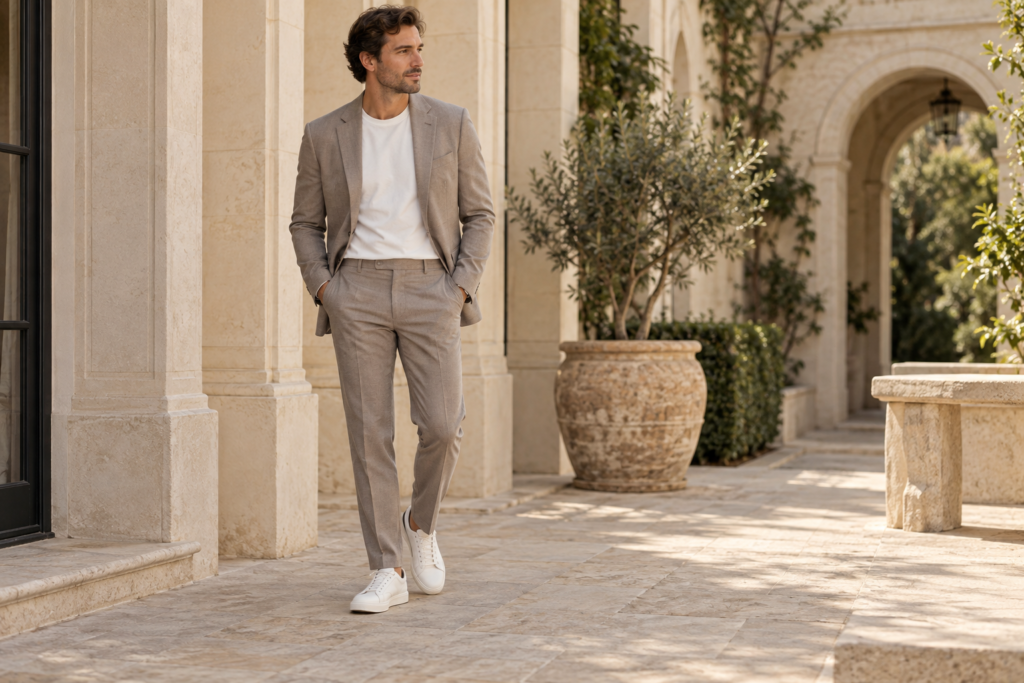
Wearing sneakers with tailored clothes is no longer a mistake; it is a proven way to look stylish, modern, and comfortable. However, running shoes with a formal suit will always look sloppy. Success comes down to picking the right sneaker and fixing your pant fit. 1. The Rules for the Right Sneaker 2. Tailor Your Pants Correctly 3. Soften the Rest of Your Outfit A stiff, padded business suit with shiny fabric clashes with the casual nature of sneakers. To make the outfit work together, make the rest of your clothing less formal:

Style Guides

Brown vs. Black Shoes: Which Color Goes with Your Outfit?

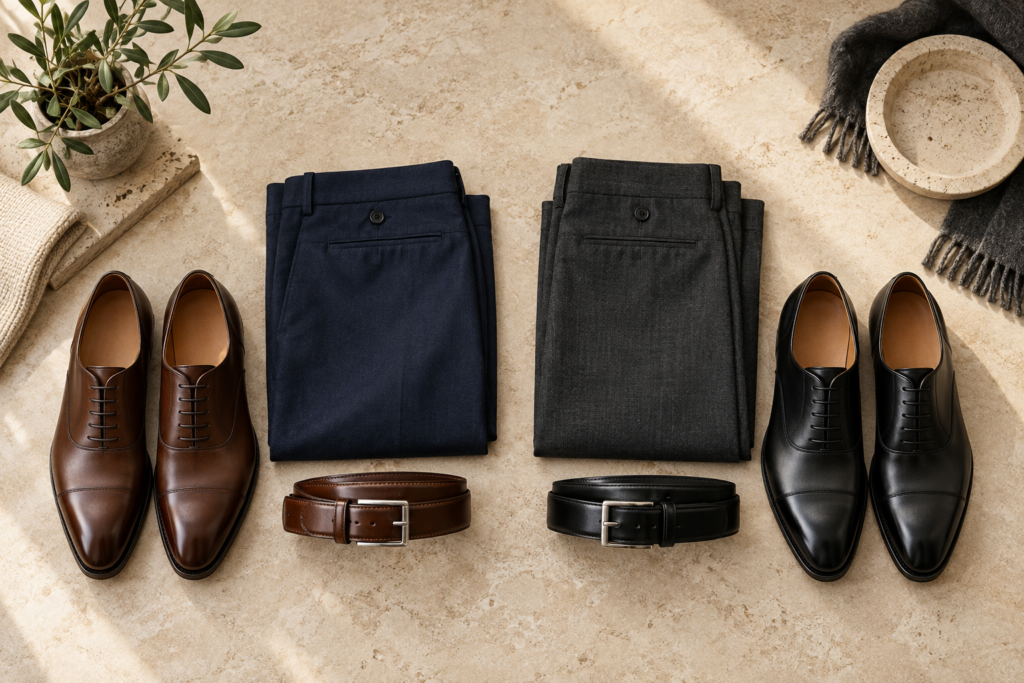
Choosing between brown and black shoes is not a guessing game. It comes down to two simple things: the color of your trousers and how formal the event is. 1. The Core Differences 2. The Color Match Guide 3. The Belt Rule Always match the leather of your belt to the leather of your shoes. A black belt goes with black shoes; a brown belt goes with brown shoes. You do not need the exact same shade of brown, but keep them in the same family (e.g., dark brown with dark brown, tan with tan).

Scroll to Top