Shoe Care

Shoe Care

How to Store Shoes and Keep Their Shape

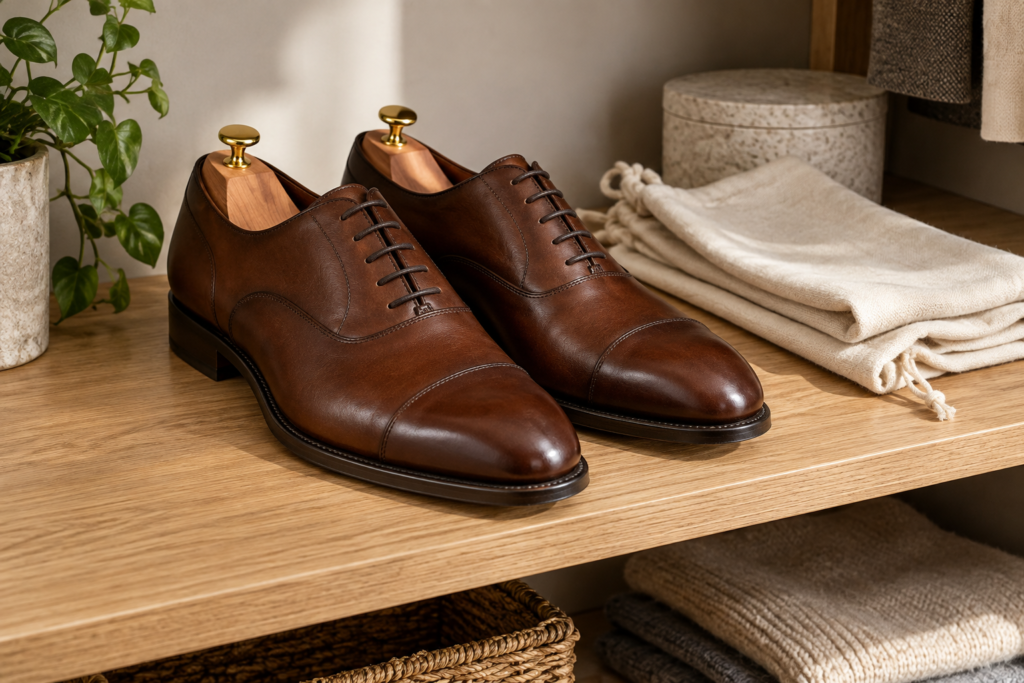
Tossing shoes into a dark pile on the closet floor crushes the heel counters, creates ugly toe creases, and traps sweat inside the lining. Storing your footwear properly takes minimal space and keeps them looking brand new. 1. Always Use Cedar Shoe Trees When you walk, your shoes bend, creating creases across the toe box. At the same time, your feet produce moisture that the leather lining absorbs. 2. Follow the 24-Hour Rotation Rule Never wear the same pair of leather shoes two days in a row. A full day of wear leaves inner leather damp. Giving them 24 to 48 hours to air out on shoe trees ensures the leather dries thoroughly and prevents bad smells. 3. Smart Storage Habits

Shoe Care

What to Do When Your Shoes Get Wet

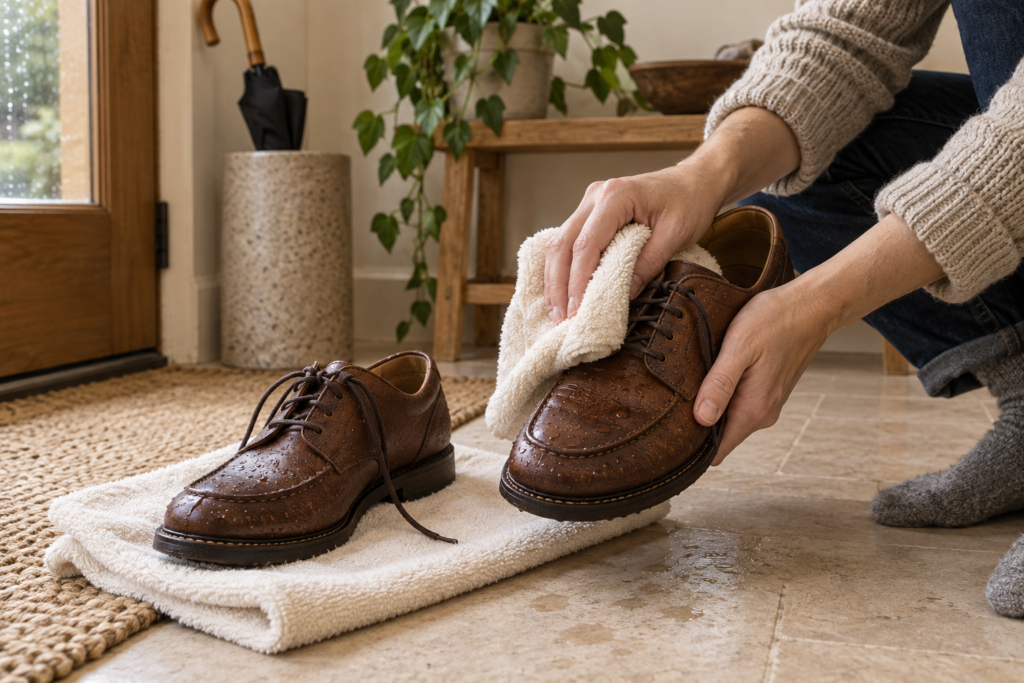
Getting caught in a sudden rainstorm happens to everyone. Wet leather becomes soft, weak, and easily stretched out of shape. The way you dry your shoes determines whether they survive or get ruined. The Golden Rule: Never Use Direct Heat Never place wet shoes near a radiator, fireplace, heater vent, or under a hair dryer. Direct heat bakes the wet leather, causing it to shrink, warp, and crack beyond repair. Slow, natural drying is the only safe method. The Step-by-Step Recovery Plan 1.Wipe off standing water:Do this immediately upon coming indoors. Pat down the outside and inside of the shoe with a dry towel. Lift out the removable insoles so air can reach the bottom. 2.Stuff with newspaper or paper towels:Do not use cedar shoe trees while soaking wet. Crumple unprinted paper towels or plain newspaper and pack them firmly into the toe box and heel. The paper pulls the moisture out from the inside. Replace the damp paper with fresh, dry paper every 2 to 3 hours. 3.Dry on their sides:Allows sole leather to breathe. If your shoes have leather soles, prop them up on their sides or tilt them against a wall. If they sit flat on the floor, the damp soles cannot dry and will develop mold. 4.Condition once fully dry:Crucial step to restore lost natural oils. Water washes out the natural oils in leather. Once the shoes are dry to the touch (usually 24 hours later), apply a generous layer of leather conditioner to restore softness.

Shoe Care

Shoe Brushes Explained: Which One Should You Use?

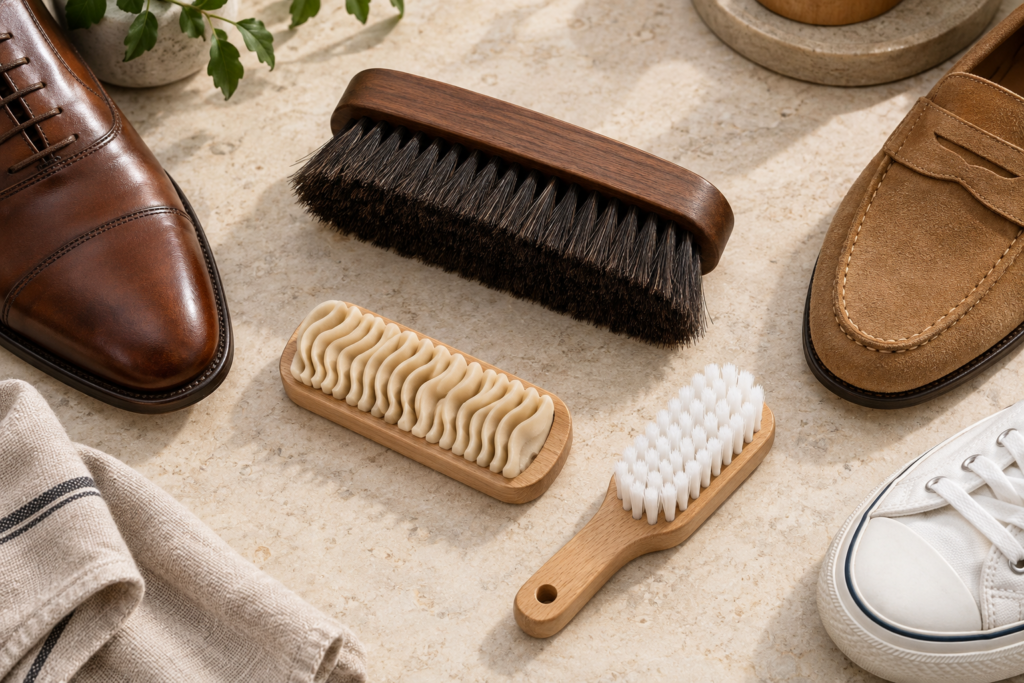
Walking down a shoe-care aisle can be confusing. There are soft brushes, hard brushes, wire brushes, and tiny round ones. Using the wrong brush can scratch your shoes, so here is what each tool actually does: 1. Horsehair Buffing Brush (The All-Rounder) 2. Dauber Brush (The Applicator) 3. Suede & Nubuck Brush (The Specialist) 4. Mud / Stiff Bristle Brush

Shoe Care

A Simple Weekly Shoe-Care Routine

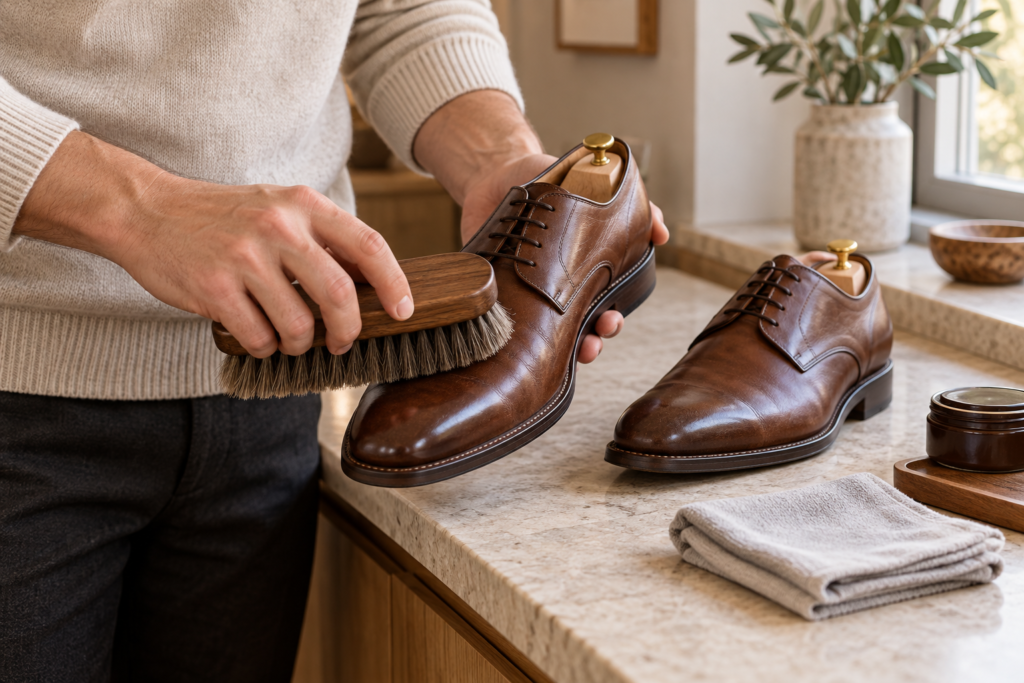
Taking care of your shoes does not require hours of work or expensive equipment. Spending just 10 minutes once a week keeps leather soft, prevents cracks, and doubles the life of your footwear. Step 1: Wipe Away Surface Dust (1 Minute) At the end of the week, take a dry horsehair brush or a clean cotton rag and brush off loose dirt, dust, and dried mud. If you leave dust on leather, it slowly draws out natural oils and causes dry cracks over time. Step 2: Clean the Soles and Edges (2 Minutes) Take a damp cloth and wipe the sides of the soles (the welt and midsole). For white sneaker soles, use an old toothbrush with a drop of mild dish soap and warm water to scrub away curb marks. Step 3: Condition the Leather (4 Minutes) Leather is animal skin—without moisture, it dries out and creases permanently. Step 4: Buff for a Natural Shine (3 Minutes) Once the conditioner sinks in, take your dry brush and vigorously buff the leather back and forth. The friction creates gentle warmth, spreading any leftover cream and giving the shoe a soft, healthy glow.

Shoe Care

The Ultimate Shoe Care Guide: How to Clean & Protect Every Material

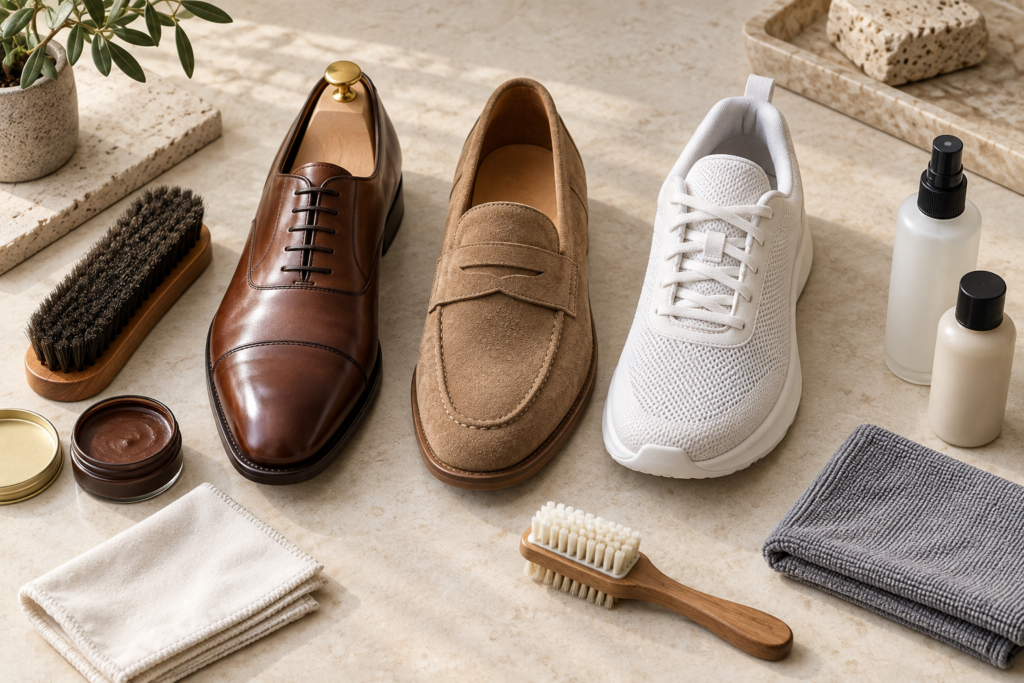
A great pair of shoes is an investment in your daily comfort and personal style. Proper maintenance not only keeps your footwear looking crisp and brand-new, but it also extends its lifespan by up to three times—saving you money while preserving structural support. At THE PSSHOES, we build our footwear using durable, high-grade uppers and cushioned soles designed for daily wear. To help you get the absolute most out of every pair, here is your definitive guide to cleaning, maintaining, and protecting every footwear material. The Universal 4-Step Cleaning Method Regardless of shoe style, following a disciplined step-by-step cleaning routine prevents permanent stains and protects sensitive material fibers. 1.Dry Brush Away Surface Dirt:Always clear loose debris before applying liquids. Use a soft-bristle brush or microfiber cloth to gently brush off dried mud, dust, and surface dirt. Skipping this step can smear dirt deeper into the fabric when water is introduced. 2.Prepare a Mild Cleaning Solution:Avoid harsh household detergents. Mix a few drops of mild liquid soap or specialized sneaker cleaner with lukewarm water. Dip a soft cloth or soft-bristle brush into the solution, squeezing out any excess water. 3.Spot-Clean the Uppers and Soles:Use circular motions with light pressure. Gently scrub the uppers in small circular motions. For stubborn scuffs on white rubber outsoles, use a firmer brush or specialized outsole cleaner to restore brightness. 4.Air Dry Naturally:Never expose wet shoes to direct heat or sunlight. Wipe down excess moisture with a clean microfiber towel. Allow your shoes to air dry at room temperature in a well-ventilated area. Direct sunlight or hair dryers will warp synthetic materials and crack leather. Material-Specific Care Cheatsheet Different materials require distinct care strategies to avoid damage or discoloration. Material How to Clean What to Avoid Synthetic / Action Leather Wipe down with a damp microfiber cloth and mild soapy water. Apply a neutral conditioner every few months. Avoid soaking in water or using alcohol-based solvents that strip protective finishes. Knit & Breathable Mesh Scrub gently using a soft toothbrush dipped in mild detergent solution. Stuff with paper towels while drying. Never put them in a washing machine or tumble dryer, which degrades internal adhesives. Suede & Nubuck Use a dedicated suede brush and eraser to lift nap and remove dry scuffs. Apply a waterproof guard spray. Never use water directly on suede—water causes permanent liquid stains and stiffening. Rubber Outsoles Scrub using a firm-bristle brush with baking soda paste or soap solution to remove scuff marks. Avoid harsh bleaches, which yellow white rubber over time. 3 Pro Tips to Make Your Footwear Last Longer Protecting your shoes takes just a few minutes a month, but pays off in years of extra wear. Explore the latest durable, easy-care collections at THE PSSHOES today.

Shoe Care

How to Care for Suede Shoes

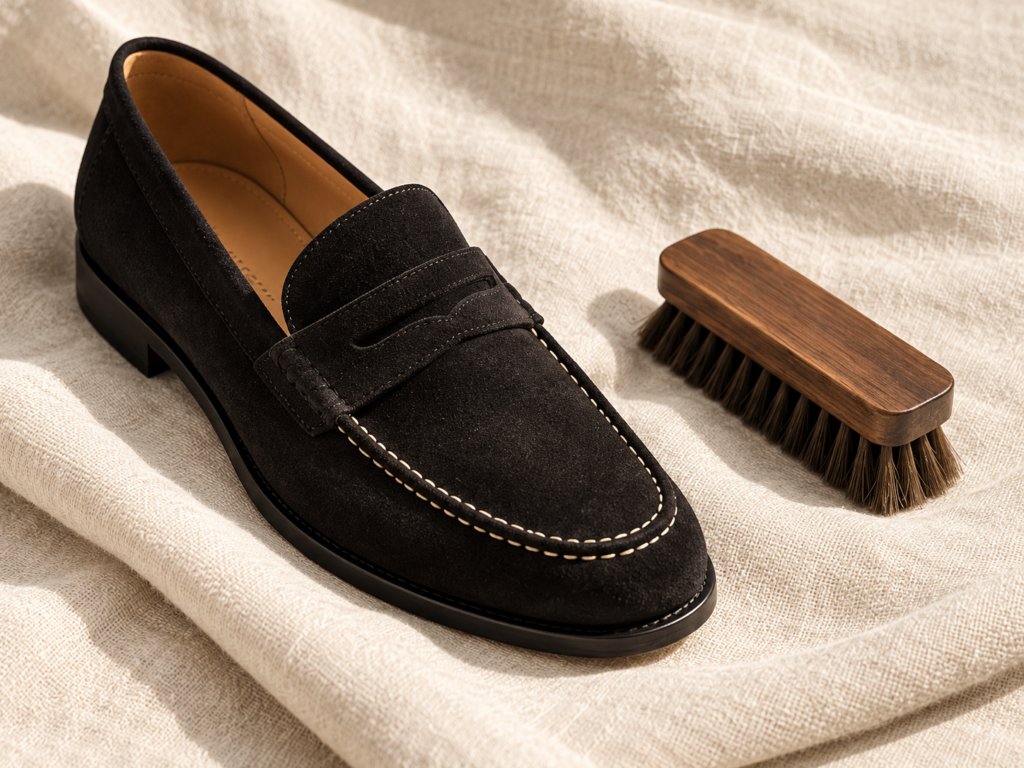
Suede shoes bring a soft texture to everyday outfits, but they need a different care routine from smooth leather. Gentle cleaning, careful drying, and sensible storage can help maintain their appearance. Before you begin, check the care instructions supplied with your shoes. Materials and finishes vary, so use products suitable for your particular pair. 1. Remove Loose Dust Gently Let your shoes dry before brushing them. If there is mud on the surface, allow it to dry before gently removing it. Use a brush designed for suede and apply light pressure. Avoid aggressive scrubbing, which can damage the surface. Finish with gentle strokes in the same direction to help the fibres look even. A quick check after wearing your shoes makes it easier to notice dirt before it builds up. 2. Treat Small Marks Carefully For a light, dry mark, a suede eraser may help if it is suitable for your shoes. Test it on a small, hidden area first and follow the product instructions. Avoid using ordinary shoe polish or leather cream on suede. These can change its texture and appearance. If a stain does not lift easily, stop rather than rubbing harder. A professional cleaner is a better option for stubborn or unfamiliar stains. 3. Let Wet Shoes Dry Naturally If your shoes get wet, gently blot excess moisture with a clean, absorbent cloth. Do not rub the surface. Place them in a ventilated area away from direct heat. Avoid hairdryers, radiators, and strong sunlight. You can loosely place plain, unprinted paper inside to help support the shape and absorb moisture. Replace the paper when damp and allow the shoes to dry fully before wearing them again. Once dry, gently brush the suede according to its care instructions. 4. Use Protection Products Correctly A protector labelled as suitable for suede may help reduce staining, but it will not make every shoe waterproof. Check the footwear and protector instructions, test a hidden area, and apply only as directed. Use sprays in a well-ventilated space and allow the shoes to dry completely. Avoid wearing delicate suede footwear in heavy rain where possible. 5. Store Your Shoes in a Dry Place Store suede shoes away from damp areas and direct sunlight. Let them air out after wearing them before putting them away. Suitable shoe trees can help support their shape. A breathable dust bag is useful for protecting clean, dry shoes from dust. Avoid sealing damp shoes inside a plastic bag. A Simple Routine to Follow After each wear, check for dirt and let your shoes air out. Brush gently when needed, deal with marks carefully, and store them once fully dry. Consistent, gentle care is more useful than occasional heavy cleaning. Start with the manufacturer’s instructions and choose products made for suede.

Scroll to Top