
Blog

Your blog category

Blog, Style Guides

The Smart Shoe-Buying Guide: How to Compare Pairs and Stop Wasting Money

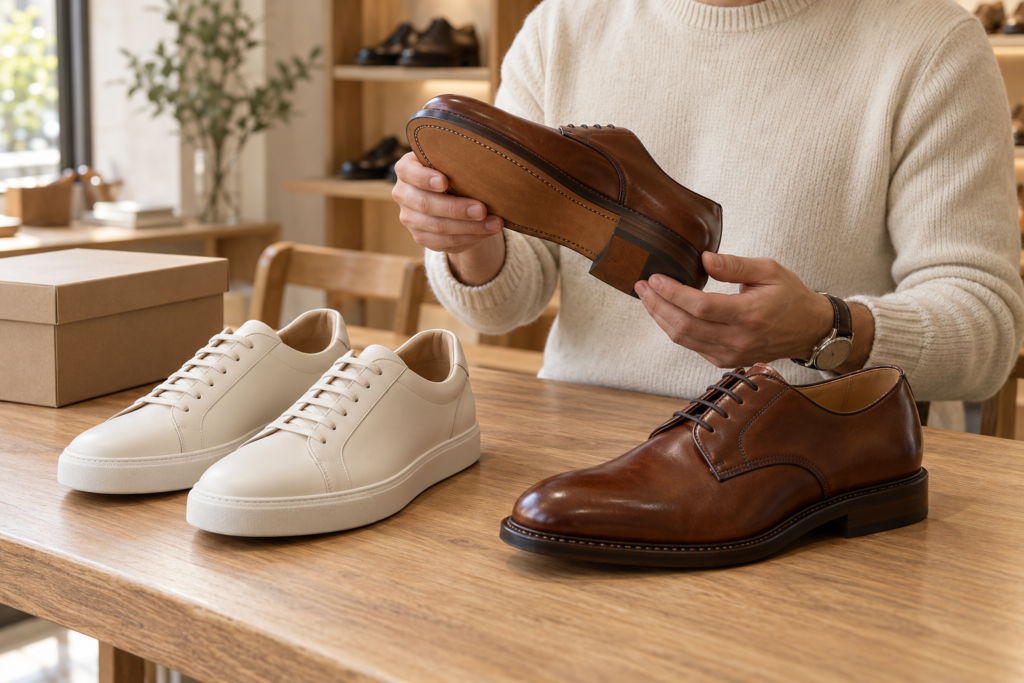
Most people buy shoes based on how they look on a display shelf or in an online photo. Two weeks later, those same shoes are collecting dust in the back of a closet because the heel slips, the sole lacks support, or the material creases awkwardly after three wears. Building a functional footwear rotation comes down to evaluation criteria: knowing how to assess materials, construction, fit, and intended use before tapping “Buy.” Here is a straightforward, professional framework for comparing pairs and making footwear purchases that last. 1. The Cost-Per-Wear Principle A cheap shoe that hurts your feet costs infinitely more than a well-built shoe you wear twice a week for three years. Instead of comparing sticker prices, calculate Cost Per Wear (CPW): $$\text{CPW} = \frac{\text{Purchase Price} + \text{Maintenance Costs}}{\text{Estimated Number of Wears}}$$ Prioritize higher spend on shoes you wear in high-impact scenarios—daily office wear, athletic trainers, and all-weather boots. 2. Head-to-Head: Material Breakdown The upper material dictates breathability, break-in time, and weather resistance. Use this comparison when evaluating options: Material Best For Pros Cons Full-Grain Leather Dress shoes, boots, premium sneakers Highly durable; molds to foot shape; ages gracefully with patina Requires break-in; higher price; needs conditioning Suede / Nubuck Casual loafers, retro sneakers Soft out of the box; rich texture and color depth Sensitive to water/salt; requires protective spray Engineered Mesh Running shoes, summer trainers Maximum airflow; ultralight; zero break-in Zero water resistance; wears quickly in high-abrasion zones Synthetic Leather (PU/Microfiber) Budget shoes, vegan alternatives Waterproof; easy to wipe clean; lower entry cost Traps heat and moisture; cracks rather than breaks in; non-repairable 3. How the Sole is Attached (The Longevity Test) How a shoe’s sole joins the upper determines whether it can be repaired when worn down: If you are buying leather boots or dress shoes over $150, look for visible welting or stitching along the sole perimeter. 4. The 4-Step In-Store & At-Home Fit Test Never assume your size is identical across different brands. A size 10 in a narrow running shoe fits entirely differently than a size 10 in a wide-toe work boot. The Essential 5-Pair Rotation A balanced wardrobe does not require dozens of options. These five functional categories cover virtually every lifestyle need: Final Checklist Before You Buy
Blog, Fit & Comfort

Wide Feet? What to Look for When Trying Shoes

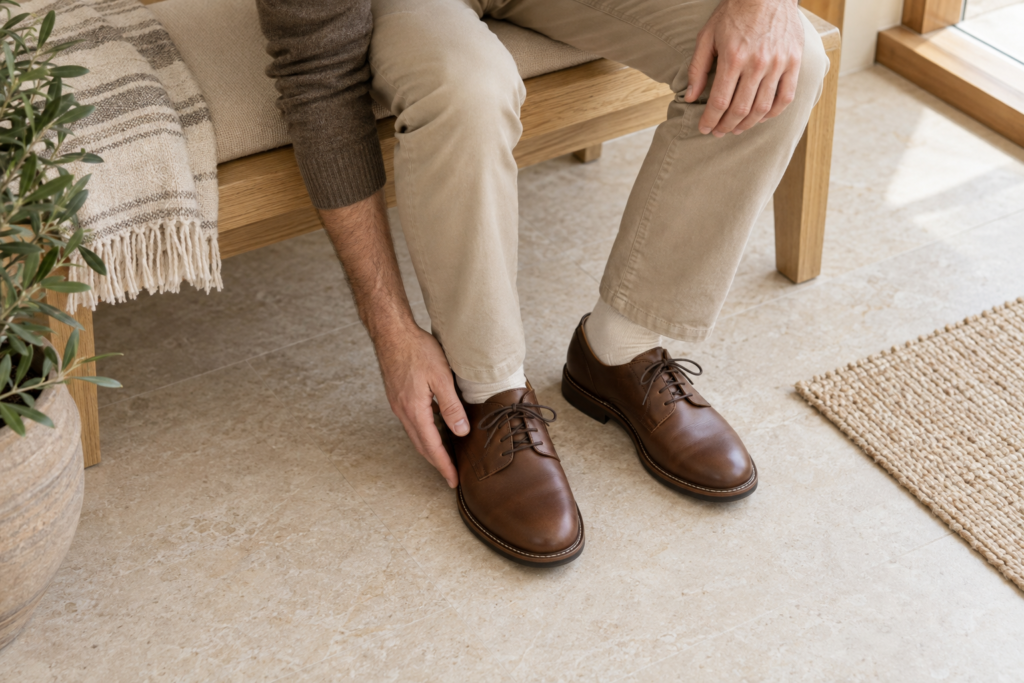
Standard medium-width shoes (labeled “D” for men or “B” for women) often squeeze wider feet, leading to numbness, bunions, and worn-out side stitching. If your feet are on the broader side, simply sizing up in length is a mistake—it leaves you with floppy, clown-like shoes that trip you up. Instead, look for designs built with forgiving geometry from the ground up: 1. The Right Shoe Construction 2. Toe Box Shapes to Seek (and Avoid) 3. Look for Width Designations Whenever possible, shop brands that offer explicit width sizing: Buying your true length in an E/EE width ensures the shoe flexes exactly where your foot bends, preserving the shoe’s structure and your comfort.

Blog

Loafers with Jeans

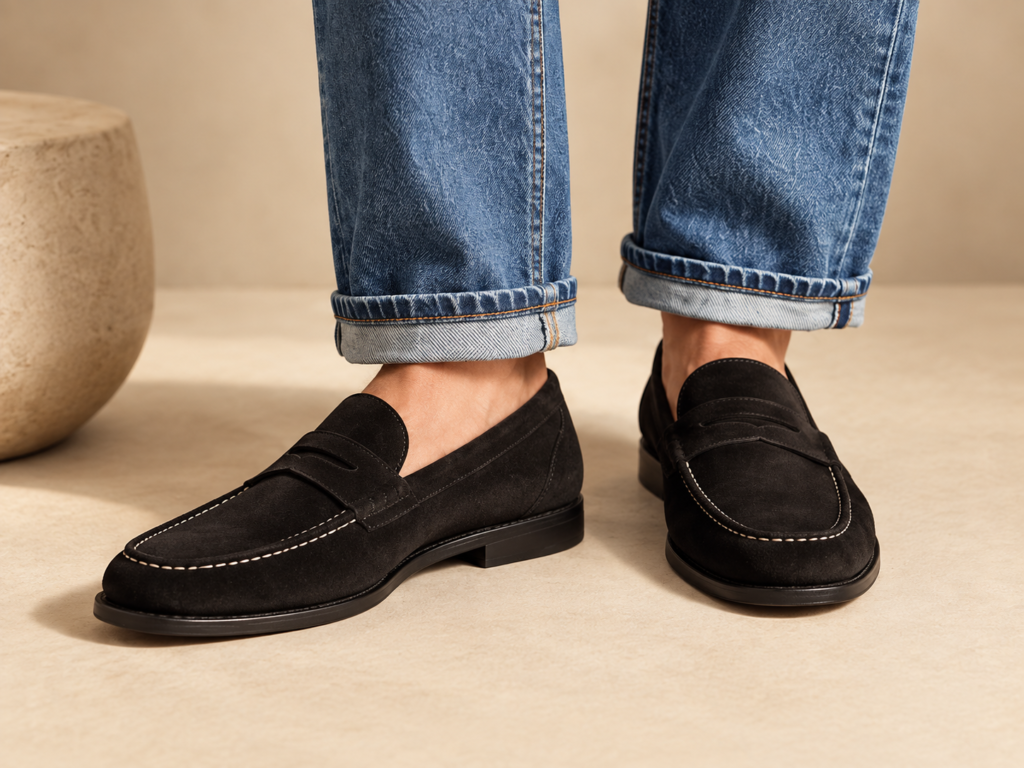
Loafers and jeans make an easy combination when you want something relaxed with a polished finish. You can wear them with a plain T-shirt, a polo, or a shirt, depending on the occasion. The main things to consider are the fit of your jeans, their length, and how the colours work together. Here is a simple way to build your outfit. 1. Start with a Comfortable Fit Straight-leg and slim-fit jeans are easy starting points because they let the shape of your loafers remain visible. Choose a fit that feels comfortable when you sit and walk. Jeans do not need to be tight to look neat. Relaxed jeans can work too. Pay attention to the hem so excess fabric does not completely cover the shoes. 2. Get the Length Right For a clean finish, try jeans that end around the ankle or rest lightly on the top of your loafers. If your jeans are slightly long, a small cuff can help. Keep it tidy and avoid rolling so much fabric that the cuff looks bulky. Stand in front of a mirror with the shoes on before deciding whether the length needs adjusting. 3. Choose Your Denim Colour Black loafers work well with several denim colours. Dark-blue jeans: Pair them with a white or light-blue shirt for a simple smart-casual outfit. Mid-blue jeans: Try a cream polo or plain T-shirt for an everyday look. Black jeans: Add a grey or off-white top for a coordinated outfit with some contrast. Start with one combination you already have in your wardrobe before buying anything new. 4. Choose Socks to Suit the Outfit No-show socks are useful if you prefer an exposed-ankle look. Choose a pair that stays in place and feels comfortable inside your loafers. Visible socks are another option, especially in cooler weather. Black, navy, or charcoal can create a subtle finish with darker jeans. There is no need to avoid socks entirely. Comfort matters as much as appearance. 5. Keep the Top Half Simple Let the loafers add the detail while the rest of your outfit stays easy to wear. A plain T-shirt works for a casual day. A polo gives the outfit a slightly smarter feel. A button-down shirt is useful for dinner or a relaxed meeting. If you add a belt, a simple black one can connect the outfit to your black loafers. Three Outfit Ideas to Try For an everyday outing: Mid-blue straight jeans, a cream T-shirt, and black loafers. For lunch or a casual meeting: Dark-blue jeans, a light-blue shirt, and black loafers. For an evening look: Black jeans, a grey polo, and black loafers. Adjust each combination to the weather, your comfort, and the occasion. Make the Look Your Own A good place to start is straight-leg blue jeans, a plain top, and black loafers. Check the trouser length, choose comfortable socks, and keep the colours simple. Small adjustments to fit and proportion can make the outfit feel more considered without making it complicated.

Scroll to Top